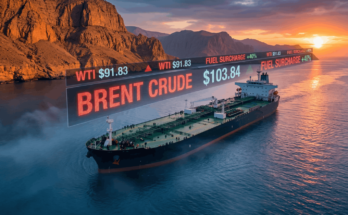
Quick answer: attacks on ships in and around the Strait of Hormuz have surged in October 2026, pushing Brent crude back above $100 a barrel. Petrol and diesel prices in Indian cities have not changed in recent days, but India’s oil import bill is rising fast, and the longer the attacks continue, the harder it gets to hold pump prices steady.
Here is what is happening at sea, and what it means for your fuel bill.
What is happening in the Strait of Hormuz
The Strait of Hormuz is the narrow sea route between Iran and Oman that carries a large share of the world’s oil and gas. It has been at the centre of the 2026 Iran war, and this month the attacks on shipping have stepped up sharply:
- At least 12 tankers carrying oil, LNG and LPG were attacked between 28 September and 5 October, according to maritime security sources cited by Reuters.
- Around 14 October, two more vessels, a container ship and a bulk carrier, sank near the strait after being hit by projectiles.
- On 18 October, UK Maritime Trade Operations reported a tugboat near the strait was struck, and an LNG tanker came under fire off Yemen.
- Iran’s Revolutionary Guards have said the strait is “closed” to vessels that ignore their rules, while Iran’s foreign minister says Tehran has sent the US a proposal, through Qatar, to reopen it.
The picture is mixed. The US says oil flows have largely recovered, and the International Energy Agency reported Gulf crude exports back to about 75% of pre-war levels. But each new attack raises shipping risks and costs.
What it has done to oil prices
- Brent crude spiked above $107 a barrel on 14 October, before easing to about $104.
- For comparison, Brent was around $72 just before the war began in February.
- European gas prices are near a four-year high.
What it means for India
1. Pump prices are steady, for now
On 15 October, petrol cost about ₹102 a litre in Delhi and ₹111 in Mumbai, unchanged from the previous day. Pump prices in India are partly cushioned by the government and the state-run oil companies, who absorb some of the swings in crude.
| City | Petrol (₹/litre) | Diesel (₹/litre) |
|---|---|---|
| Delhi | 102.12 | 95.20 |
| Mumbai | 111.21 | 97.83 |
| Kolkata | 113.51 | 99.82 |
| Chennai | 107.76 | 99.55 |
Prices as of 15 October 2026.
2. The import bill is rising sharply
India’s crude oil import bill jumped about 47% year-on-year to $15.4 billion in September, even though import volumes rose only around 7%. India is paying more per barrel, including for crude bought from suppliers that don’t use the Hormuz route.
3. The pressure points to watch
- Oil company losses: when crude stays high and pump prices stay flat, state oil companies absorb the difference. That can’t last indefinitely.
- The rupee and inflation: a bigger oil bill means more dollars leaving India, which weighs on the rupee and can push up prices of everything transported by road.
- LPG: much of India’s cooking gas comes from the Gulf, so shipping disruptions hit LPG supply quickly.
What could happen next
If Iran’s proposal to reopen the strait leads to talks and attacks ease, crude could fall back and the pressure on India would ease too. If attacks keep rising, fuel price hikes in India become more likely. For now, there is no official announcement of a price change.
For the background to this crisis, read our earlier explainer: The Hormuz Toll: Why the 2026 Strait of Hormuz Oil Crisis is Spiking Your Bills.
Frequently asked questions
Why are ships being attacked in the Strait of Hormuz?
The attacks are part of the 2026 Iran war. Iran says it controls the strait and has warned ships that ignore its rules, while it is also pushing back against US-backed efforts to keep oil moving.
Will petrol prices go up in India?
Prices were unchanged as of mid-October. If crude stays above $100 for long, the chance of a hike rises, but no increase has been announced.
What is the current Brent crude price?
It was around $104 a barrel in mid-October 2026, after briefly topping $107.
How much oil passes through the Strait of Hormuz?
Normally a large share of the world’s seaborne oil and much of the Gulf’s LNG. Gulf crude exports were recently reported at about 75% of pre-war levels.
Sources: The National; Euronews; HDFC Sky (fuel prices via Goodreturns); Daily Times UAE; OilPrice.com; Legacy IAS (The Hindu analysis). Situation changing quickly; figures as of 18 October 2026.