If you searched “Butterball turkey recall” this Thanksgiving morning, you are not alone. A new analysis of federal inspection data shows that salmonella turned up in just under 43% of ground or chopped turkey samples taken at four Butterball plants over the past year, far above the industry average. The headlines spread fast the day before the biggest turkey meal of the year, and plenty of people are now wondering whether the bird in their oven is safe. Here is what was actually found, what it does and does not mean for your dinner, and how to cook any turkey safely.
Quick answer: No, there is no Butterball turkey recall in 2026. The findings come from USDA inspection data analyzed by the investigative outlet SourceMaterial and published with The Guardian on November 25. Salmonella was found in raw ground or chopped turkey samples, including 16 of 45 (36%) at Butterball’s Mount Olive, North Carolina plant. No contamination was found in Butterball’s whole birds or ready-to-eat cooked products. Cooking turkey to an internal temperature of 165°F (74°C) kills salmonella.
What the inspection data found
The US Department of Agriculture’s Food Safety and Inspection Service (FSIS) regularly samples poultry at slaughterhouses to check for salmonella and other bacteria. SourceMaterial analyzed FSIS data from fiscal years 2025 and 2026, which was supplied by the animal-rights campaign group Project Slingshot, and says it verified the figures before publishing.
The headline number: across four Butterball plants, just under 43% of ground or chopped turkey samples tested over the past year contained salmonella. At the company’s Mount Olive factory, described as the largest turkey slaughterhouse in the US, inspectors found the bacteria in 16 of 45 samples, or about 36%. That plant processes around 285,000 birds a week and supplies raw ground turkey, burgers and sausages nationwide.
Butterball sells to the country’s three biggest grocery chains, Walmart, Costco and Kroger, as well as fast-food companies, which is a big reason the story drew so much attention.
The key numbers at a glance
| Measure | Figure |
|---|---|
| Butterball ground/chopped turkey samples with salmonella (4 plants, past year) | Just under 43% |
| Mount Olive, NC plant | 16 of 45 samples (36%) |
| USDA acceptable limit for an individual plant | 13.5% |
| Jennie-O (Butterball’s main rival), ground/chopped samples positive for pathogens | 7% |
| Foster Farms contamination rate | 29% |
| Koch Foods contamination rate | 27% |
| Average across the whole US meat industry (any pathogen) | 12% |
| Butterball whole birds and cooked products | No contamination found |
| Mount Olive weekly output | About 285,000 birds |
So why is there no recall?
This is the part that surprises most people. Under current USDA rules, a plant that goes over the 13.5% salmonella limit for ground poultry does not get fined and does not have to recall its products. Instead, the USDA requires the plant to explain how it is dealing with the problem.
The reason is that salmonella is treated as a bacterium that can be present on raw poultry and is expected to be killed by proper cooking. Recalls for raw poultry usually happen when products are linked to an outbreak of illness or another specific problem, not simply because routine sampling found the bacteria.
That is exactly what happened in Butterball’s last major salmonella recall. In March 2019, the company recalled about 78,164 pounds of raw ground turkey made at Mount Olive after a strain called Salmonella Schwarzengrund sickened five people in two states. No illness outbreak has been linked to the new data.
What Butterball says
A Butterball spokesperson told The Guardian that food safety is critically important to the company and that it keeps investing in new technology, tightening its processes and working with outside experts to reduce pathogens including salmonella. The company also said it is taking part in an FSIS pilot program looking at the causes of foodborne illness, and stressed that none of its pre-cooked products contained salmonella.
Alice Johnson, Butterball’s senior vice-president of food safety, quality and animal care, argued that regulators should measure how much salmonella is in a sample, not just whether it is there at all. Consumer advocates disagreed. Sarah Sorscher of the Center for Science in the Public Interest said the better goal is no salmonella in food, and that the US is not there yet.
Why ground turkey is riskier than a whole bird
The difference between whole birds and ground meat is not a coincidence. Grinding mixes meat from many birds and spreads any surface bacteria all the way through the product. Sorscher explained that every extra processing step is another chance for contamination.
Thomas Gremillion of the Consumer Federation of America also pointed to faster slaughter line speeds, which the current administration has allowed poultry plants to increase. Faster lines, he said, make it harder to stop material from the digestive tract, where bacteria concentrate, from reaching the meat.
The antibiotic-resistance angle
The data also looked at samples taken from birds’ intestines. Across Butterball’s slaughterhouses in fiscal 2026, about 65% of samples that contained salmonella or campylobacter carried strains resistant to at least one antibiotic, close to Jennie-O’s 61%. Butterball noted that these tests come from whole birds at slaughter and do not necessarily reflect contamination in finished products. The company also said 60% of its turkeys received no antibiotics last year.
Is your Thanksgiving turkey safe to eat?
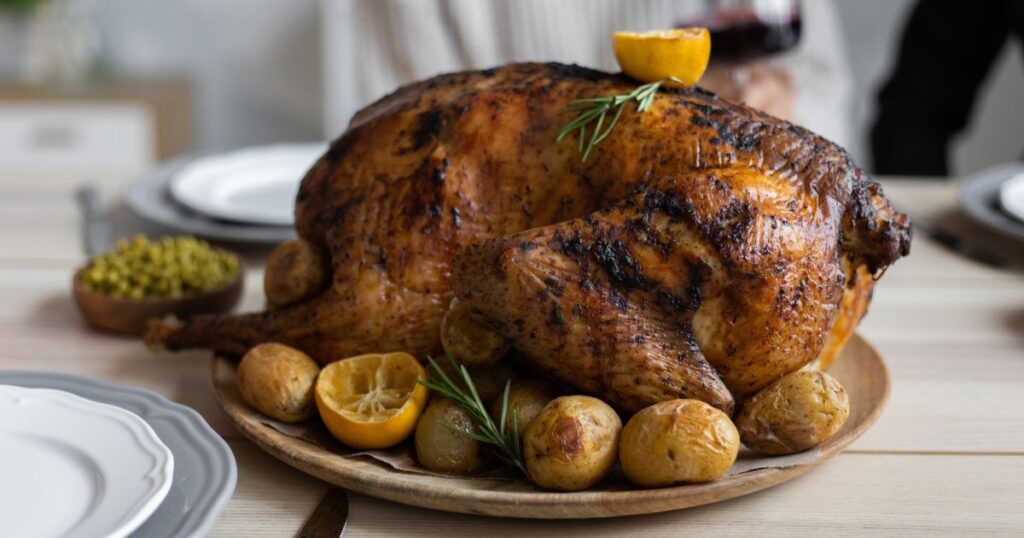
For most families cooking a whole turkey today, the practical answer is yes, as long as it is handled and cooked properly. The positive samples came from raw ground and chopped turkey, not whole birds, and salmonella is destroyed by heat. These steps, based on long-standing USDA food safety advice, matter far more than which brand is in your oven:
- Cook to 165°F (74°C). Check with a food thermometer in the thickest part of the breast, the innermost part of the thigh and the wing. Pop-up timers are not reliable on their own.
- Don’t wash raw turkey. Rinsing splashes bacteria around your sink and counters without removing it from the meat.
- Keep raw and cooked apart. Use separate cutting boards and plates, and wash your hands and utensils after touching raw poultry.
- Stuffing must hit 165°F too. Cooking it in a separate dish is the safer option.
- Refrigerate leftovers within 2 hours. Bacteria multiply quickly at room temperature, and the dinner table is the danger zone.
- Reheat leftovers to 165°F. If you use a microwave, stir and rotate the food, because microwaves heat unevenly and leave cold spots.
- Ground turkey burgers and meatballs: cook them all the way through to 165°F as well; color is not a reliable sign of doneness.
According to the Centers for Disease Control and Prevention, about 25,500 Americans are hospitalized each year after exposure to salmonella and campylobacter, and about 435 die. Symptoms of salmonella infection usually include diarrhea, fever and stomach cramps. Young children, older adults, pregnant people and anyone with a weakened immune system are at higher risk, and severe or persistent symptoms need a doctor. Winter holidays already bring plenty of germs, as we explained in why colds and flu spike in winter.
Disclaimer: This article is for general information only and is not medical advice. If you think you have food poisoning, especially with high fever, bloody diarrhea, dehydration or symptoms lasting more than a few days, contact a healthcare professional.
Why this is trending right now
Timing is everything. The report landed on November 25, the day before Thanksgiving, when tens of millions of Americans are buying, thawing and roasting turkeys. Search interest for “Butterball turkey recall 2026” jumped above 5,000 searches in the US within hours, according to Google Trends, as shoppers tried to work out whether they needed to throw anything out. They don’t: no product has been recalled, and no outbreak has been reported.
What happens next
Because the plant exceeded the USDA benchmark, Butterball must explain to regulators how it plans to bring salmonella levels down. Food safety groups are likely to use the findings to push for tougher national salmonella standards for poultry, an issue that has bounced between administrations in recent years. If FSIS ever announces a recall or a public health alert linked to Butterball products, it will appear on the USDA’s official recalls page, which is the best place to check rather than social media posts.
Frequently asked questions
Is there a Butterball turkey recall in 2026?
No. As of November 26, 2026, no Butterball product has been recalled. The news is about inspection data showing high salmonella rates in raw ground or chopped turkey samples, which does not trigger a recall under USDA rules.
Are Butterball whole turkeys affected?
According to the analysis, no contamination was identified in Butterball’s whole birds or its ready-to-eat cooked products. The positive samples were ground or chopped turkey.
Should I throw away my Butterball ground turkey?
There is no official instruction to do so. Raw poultry from any brand can carry salmonella, which is why it should always be cooked to 165°F and handled carefully. If a recall is ever announced, follow the instructions on the USDA FSIS recall notice.
What temperature kills salmonella in turkey?
The USDA says poultry is safe at an internal temperature of 165°F (74°C), measured with a food thermometer in the thickest parts of the meat.
When was the last Butterball recall?
The last major one was in March 2019, when Butterball recalled about 78,164 pounds of raw ground turkey from its Mount Olive plant after a Salmonella Schwarzengrund outbreak sickened five people in two states.
Sources: The Guardian and SourceMaterial (via AOL), USDA Food Safety and Inspection Service, Consumer Reports, Centers for Disease Control and Prevention, Google Trends.