
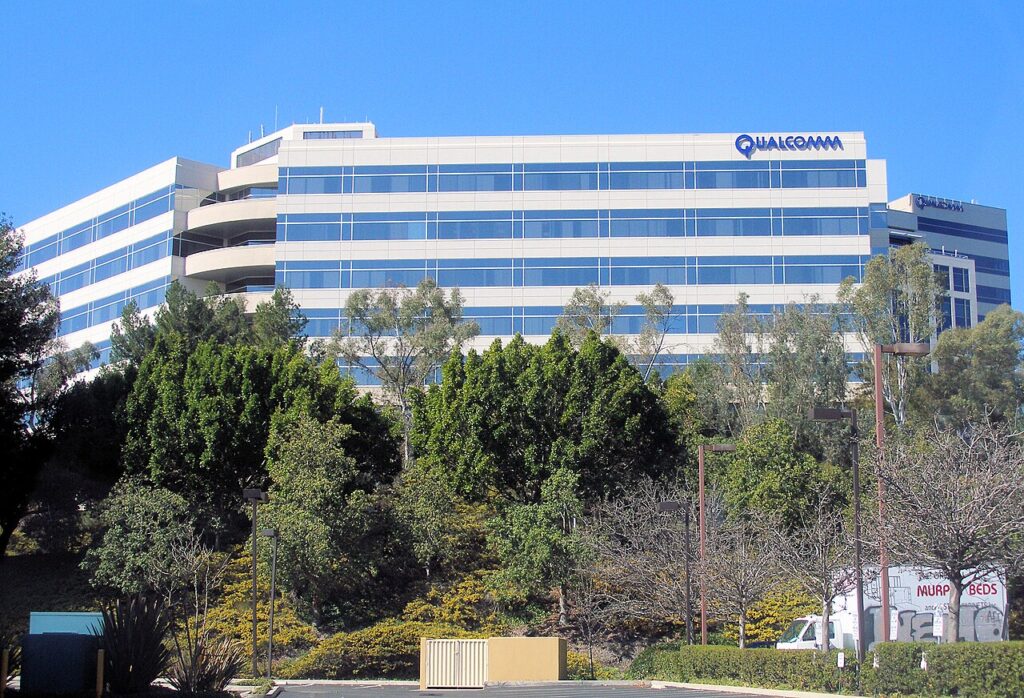
Qualcomm did almost everything Wall Street asked of it last quarter. Revenue came in above estimates, earnings per share edged past forecasts, and its car-chip business nearly doubled. Yet the stock fell more than 6% in after-hours trading on Wednesday, November 4, 2026, and was down about 9% in premarket trading on Thursday. The reason sits in one line of its guidance: the cost of making chips is rising faster than Qualcomm can pass it on.
Quick answer: Qualcomm reported fiscal Q4 2026 revenue of $10.44 billion (non-GAAP) and earnings of $2.17 per share, both slightly ahead of forecasts. Shares dropped about 9% in Thursday premarket trading because handset chip sales fell 26%, the company warned that rising wafer, packaging and memory costs will cut its chip margin to 20%–22%, and its next-quarter profit guidance midpoint came in just below estimates.
What Qualcomm reported
Qualcomm’s fiscal fourth quarter ended on September 27, 2026. The headline numbers from the company’s earnings release:
| Metric (fiscal Q4 2026) | Result | Change vs year ago |
|---|---|---|
| Revenue (non-GAAP) | $10.44 billion | Down 7% |
| Revenue (GAAP) | $10.32 billion | Down 8% |
| EPS (non-GAAP) | $2.17 | Down 28% from $3.00 |
| Net income (non-GAAP) | $2.33 billion | Down 28% |
| Handset chips | $5.14 billion | Down 26% |
| Automotive chips | $1.99 billion | Up 89% |
| IoT (PCs, XR, robotics and more) | $1.89 billion | Up 4% |
| Licensing (QTL) | $1.30 billion | Down 7% |
Analysts had expected revenue of around $10.14 billion, according to figures cited by The Elec, and EPS of about $2.16. CEO Cristiano Amon said the company delivered “fourth quarter non-GAAP revenues at the high end of our guidance.”
For the full fiscal year, non-GAAP revenue was $43.24 billion, down 2%, and non-GAAP EPS was $10.54, down 12%. GAAP net income jumped to $13.63 billion, but that was largely due to a one-off $5.7 billion tax benefit, not underlying growth.
Why Qualcomm stock fell
1. Smartphones are shrinking as a share of the business
Handsets are still Qualcomm’s biggest business, and that business fell by a quarter year on year. Reuters reported that smartphone chip sales missed Wall Street estimates. Brokerages pointed to the loss of Apple revenue, as Apple shifts to its own modems, and to higher input costs as ongoing drags.
2. A margin warning tied to chip costs
This was the main trigger. Qualcomm guided its chip-design (QCT) operating margin to 20%–22% for the December quarter, down from 24% in Q4. It blamed “broad-based” increases in the cost of wafer fabrication, assembly, testing, advanced packaging, memory and other materials. Qualcomm is raising its own prices, but it does not expect the full benefit to show up until the second half of fiscal 2027.
Memory is a big part of the story. Demand for memory from AI data centres has pushed prices up across the industry. Qualcomm does not sell most of the memory inside phones, but when memory gets pricier, phone makers have less budget left for processors. Amon said, “Unlike some other companies, we saw the memory shortage coming and prepared for it early,” and described the problem as one of supply, not demand: “We don’t have a demand issue; it’s a supply issue.”
3. Guidance was only in line
For the December quarter, Qualcomm guided for:
- Revenue of $10.4 billion to $11.2 billion (midpoint $10.8 billion, above the roughly $10.48 billion analysts expected)
- Non-GAAP EPS of $2.15 to $2.35 (midpoint $2.25, just below the $2.27 consensus)
Revenue guidance was fine. But with margins under pressure, investors focused on profit, and a midpoint slightly under expectations was enough to trigger selling. At least eight brokerages cut their price targets after the report, according to LSEG data cited by Reuters. If the premarket losses held, Qualcomm would lose about $17.5 billion in market value.
The bright spots: cars and data centres
The quarter was not all bad news. Automotive revenue rose 89% to a record $1.99 billion as carmakers put more Snapdragon chips into dashboards and driver-assistance systems.
The bigger long-term bet is data centres. According to The Elec, Qualcomm expects revenue from its AI data centre work with Amazon to start showing this quarter, with more than $650 million projected for the December quarter. The company says shipments should rise each quarter, taking the annualised run rate to as much as $7 billion by the end of fiscal 2027, and it still expects to reach its $5 billion data centre revenue target for that year.
Amon put it this way in the earnings release: “Fiscal 2027 marks the start of our non-handset revenue inflection, including the ramp of our Data Center business.” Qualcomm expects non-mobile revenue to grow more than 60% in fiscal 2027.
Not everyone is convinced yet. Morgan Stanley analysts wrote that they “lack conviction in a three-year ramp in a target-rich environment for AI semis,” and questioned whether a business built on custom chips will last as the market moves to merchant products.
Qualcomm vs the rest of the chip sector
Qualcomm’s results land in a busy earnings season for chipmakers. Rival AMD reported record revenue of $13.4 billion in its Q3 a day earlier, powered by data centre sales. That contrast explains part of the reaction: investors are rewarding companies already selling large volumes of AI hardware, and being more cautious with those still building up to it. AI-linked stocks have also had a rough few weeks, as we covered in how AI stocks lost $5 trillion in October.
On valuation, Reuters noted Qualcomm trades at about 16.8 times forward earnings, well below MediaTek (about 25.4 times) and Intel (about 33.3 times).
Shareholder returns
Qualcomm kept returning cash. In fiscal 2026 it bought back 48 million shares for $7.82 billion and paid $3.85 billion in dividends, a total of $11.67 billion. The quarterly dividend is $0.92 per share.
What to watch next
- Memory prices: if the shortage eases, Qualcomm’s margins and its customers’ budgets both improve.
- Data centre revenue: the first reported number for the Amazon work in the December quarter will be a key test.
- Android demand: Amon said Android demand improved from the previous quarter. Holiday phone sales will show whether that continues.
- Price increases: Qualcomm says the full effect lands in the second half of fiscal 2027.
Disclaimer: This article is for information only and is not financial advice. Do your own research or speak to a licensed adviser before making investment decisions.
Frequently asked questions
Did Qualcomm beat earnings expectations?
Yes, narrowly. Non-GAAP EPS of $2.17 beat the roughly $2.16 consensus, and revenue of $10.44 billion beat the roughly $10.14 billion estimate cited by The Elec.
Why did Qualcomm stock drop after earnings?
Because of the outlook. Qualcomm warned rising wafer, packaging and memory costs will cut its chip margin to 20%–22%, and its next-quarter EPS guidance midpoint of $2.25 was just below the $2.27 expected. Handset revenue also fell 26%.
What is Qualcomm’s guidance for the next quarter?
Revenue of $10.4 billion to $11.2 billion and non-GAAP EPS of $2.15 to $2.35 for the quarter ending in December 2026.
How big is Qualcomm’s data centre business?
It is just starting. Qualcomm expects more than $650 million from its Amazon AI data centre work in the December quarter and is targeting $5 billion in data centre revenue in fiscal 2027.
When is Qualcomm’s next earnings report?
Qualcomm has not confirmed a date. Its fiscal Q1 2027 results, covering October to December, would normally be reported in early February.
Sources: Qualcomm Q4 and fiscal 2026 earnings release, Reuters (via The Star), The Elec, Tech Insider, Investing.com.