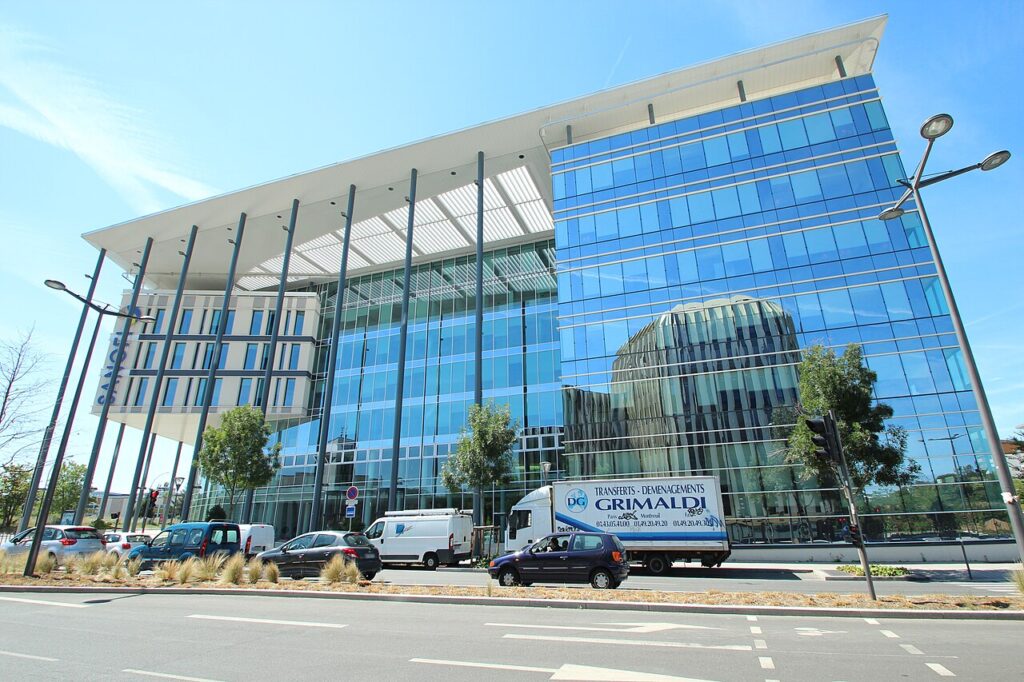
French drugmaker Sanofi has agreed to buy Insmed, a New Jersey biotech with a fast-selling lung drug, for about $41 billion in cash. That makes the Sanofi Insmed deal the biggest pharmaceutical takeover in roughly three years, and the boldest move yet by Sanofi’s new chief executive, Belén Garijo, as the company races to replace income from its blockbuster Dupixent before that drug’s patents start to expire.
Quick answer: On November 24, 2026, Sanofi said it will pay $175 per Insmed share in cash, an equity value of about $41 billion. That is roughly 17.5% above Insmed’s last close and 46% above its price on November 18, before takeover talk leaked. The deal is expected to close in the first half of 2027. Sanofi wants Insmed’s Brinsupri, the first approved treatment for the chronic lung disease bronchiectasis.
What happened
Sanofi announced on Tuesday that it had signed a merger agreement to acquire all of Insmed’s outstanding shares for $175 each in cash. It is paying for the deal with a mix of new debt and cash it already has, and says it has secured committed financing.
The news did not come out of nowhere. On Thursday, November 19, Bloomberg reported that Sanofi was weighing a takeover of Insmed. Insmed’s shares jumped by more than 20% that day, and Sanofi’s own shares fell in Paris as investors worried about the price. Five days later, the talks turned into a signed deal.
Insmed shares rose about 14% in early trading after the announcement, according to CNBC, moving toward the offer price.
The deal in numbers
| Item | Detail |
|---|---|
| Buyer | Sanofi (Paris, France) |
| Target | Insmed (Bridgewater, New Jersey) |
| Price per share | $175 in cash |
| Equity value | About $41 billion |
| Premium to last close | About 17.5% |
| Premium to “unaffected” price (Nov 18) | About 46% |
| Financing | Debt plus cash on hand; committed financing secured |
| Expected closing | First half of 2027, subject to approvals |
| Earnings impact | Expected to add to Sanofi’s business EPS by the end of 2028 |
| Effect on 2026 guidance | None expected, Sanofi says |
Why the Sanofi Insmed deal is trending
Size is the first reason. Sanofi’s finance chief, François Roger, told reporters it is “the fourth-largest deal in cash in Europe ever, and the first largest in cash in France.” Industry watchers had already noted that a deal of this scale would be among the biggest in pharma since Pfizer agreed to buy Seagen for about $43 billion in 2023.
The second reason is the price story. Insmed’s stock had a rough year: it fell from about $204 in November 2025 to near $120 on November 18, 2026, a drop of about 41%. Part of that slide followed a December 2025 trial in which brensocatib failed in a sinus condition. Sanofi’s $175 offer lets shareholders who held through that slump get out at a much better price, while buyers who bought after the leak earn far less.
The third reason is what the deal says about the drug industry. Big companies with ageing blockbusters are paying up for medicines that are already on the market and growing quickly, rather than betting only on early research.
What Insmed makes
Brinsupri: the drug Sanofi is really buying
Insmed’s main prize is Brinsupri (brensocatib), a once-daily pill approved by the US Food and Drug Administration on August 12, 2025. It was the first treatment ever approved for non-cystic fibrosis bronchiectasis, a long-term lung disease in which damaged, widened airways trap mucus and lead to repeated infections and flare-ups.
Brinsupri is also the first approved drug in a new class called DPP1 inhibitors. It blocks an enzyme that switches on inflammatory proteins inside white blood cells called neutrophils, which drive much of the airway damage. In the large ASPEN trial, the 10 mg and 25 mg doses cut the yearly rate of flare-ups by about 21% and 19% compared with placebo. It is approved for adults and children aged 12 and older, and Insmed set a US list price of about $88,000 a year at launch.
Sales have taken off. Insmed reported a little over $917 million in Brinsupri sales in the first nine months of 2026 and raised its full-year forecast for the drug to $1.35 billion to $1.4 billion, well above the “audacious” $1 billion target its chief executive set earlier in the year.
Arikayce and the pipeline
Insmed’s older product, Arikayce, was approved in 2018 for a hard-to-treat lung infection caused by Mycobacterium avium complex (MAC) bacteria in patients who have not responded to other treatment. The company also has a late-stage candidate called TPIP that is being studied in several respiratory diseases. Garijo said the combined portfolio’s peak sales potential is expected to exceed $10 billion through the end of the next decade.
Why Sanofi needs this: the Dupixent cliff
Sanofi’s biggest product by far is Dupixent, an injected antibody for eczema, asthma, COPD and other conditions, developed with Regeneron. In 2025 it brought Sanofi almost €16 billion, about 36% of group sales. Its patents begin to expire in 2031, and once cheaper copies arrive, that income will shrink.
Sanofi’s own research has not produced an obvious replacement. Several pipeline setbacks pushed its shares down over the past year, and analysts have openly said the company needs to buy growth. Garijo, who took over as CEO this year after running Germany’s Merck KGaA, said in October that acquisitions would be a growth driver and that Sanofi would look at deals larger than its usual $2 billion to $5 billion range.
Insmed fits neatly. Respiratory medicine is familiar ground for Sanofi through Dupixent, its RSV antibody Beyfortus and its vaccines, so the same specialists and sales teams can promote Brinsupri to lung doctors.
Sanofi’s recent deals compared
| Deal | Year | Approximate value |
|---|---|---|
| Insmed (lung diseases) | 2026 | $41 billion |
| Blueprint Medicines (rare immunology) | 2025 | Up to $9.5 billion |
| Dynavax (hepatitis B vaccine) | 2026 | About $2.2 billion |
| Expanded Regeneron alliance (4 early drugs) | 2026 | $1 billion upfront, up to $8 billion |
What it means for shareholders
Insmed shareholders will receive $175 in cash for each share once the deal closes. Because the stock trades a little below that level until closing, the small gap reflects the time value of money and the risk that the deal falls through.
Sanofi shareholders take on debt and a big bet on one drug’s growth. Sanofi says the deal should add to earnings per share by the end of 2028, and it estimates more than $500 million in annual cost benefits, but the payback depends on Brinsupri continuing to grow and on new approvals outside the US. Sanofi was worth roughly $111 billion before the deal, so Insmed is a large purchase relative to its size.
For a wider look at what is moving markets this week, see our story on Jensen Huang’s return as Nvidia CEO.
What happens next
- Approvals: The deal needs Insmed shareholder approval and antitrust clearance before it can close.
- Timing: Sanofi expects closing in the first half of 2027.
- Rival bids: When talks first leaked, Bloomberg’s sources said other bidders could emerge. A signed agreement makes that less likely, but it is something investors will watch.
- Brinsupri launches abroad: Launches in Europe, the UK and Japan, subject to approval in each region, will shape how fast sales grow.
Disclaimer: This article is for information only and is not financial advice. Do your own research or speak to a licensed adviser before buying or selling any shares.
Frequently asked questions
How much is Sanofi paying for Insmed?
Sanofi is paying $175 per share in cash, which values Insmed’s equity at about $41 billion.
When will the Sanofi Insmed deal close?
Sanofi expects the deal to close in the first half of 2027, once regulators and Insmed shareholders approve it.
What is Brinsupri used for?
Brinsupri (brensocatib) treats non-cystic fibrosis bronchiectasis in people aged 12 and older. It was the first approved drug for the condition and reduces the number of flare-ups.
Why does Sanofi need Insmed?
Its top drug, Dupixent, makes up about a third of sales and starts losing patent protection in 2031. Insmed adds a growing medicine that could help fill that gap.
Is this the biggest pharma deal of 2026?
It is one of the largest pharma acquisitions in about three years, with reports comparing it with Pfizer’s roughly $43 billion purchase of Seagen in 2023. Sanofi says it is the largest all-cash deal ever by a French company.
Sources: Sanofi and Insmed announcement (via TipRanks/TheFly), Reuters, CNBC, Bloomberg (as reported by Fierce Pharma and Stocktwits), US FDA, Fierce Pharma, Pharmaceutical Technology, Börsen-Zeitung, France Epargne.