
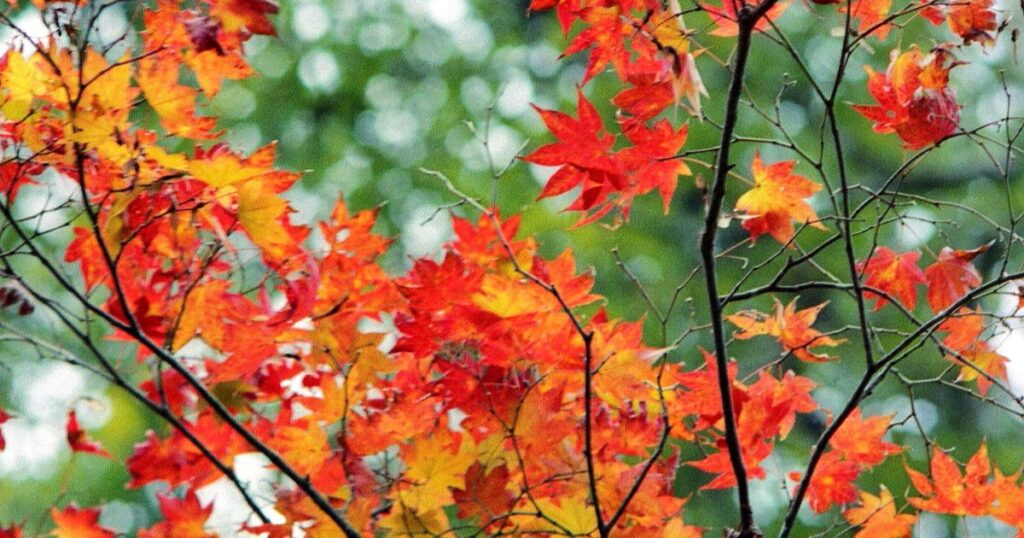
Every autumn, forests turn into blazes of yellow, orange and red. But why do leaves change colour? The surprising answer is that many of those colours were in the leaves all summer, hidden by green. Here’s the simple science behind fall foliage, and why some years are more spectacular than others.
Quick answer: Leaves are green because of chlorophyll, which plants use to make food from sunlight. As days get shorter and cooler, trees stop making chlorophyll and it breaks down. That reveals yellow and orange pigments called carotenoids, which were there all along. Some trees also make new red and purple pigments called anthocyanins in autumn. Brown comes from tannins left behind.
Why are leaves green in summer?
Chlorophyll absorbs red and blue light from the Sun and reflects green light, so leaves look green. Plants use the energy they capture to turn water and carbon dioxide into sugar, a process called photosynthesis. Chlorophyll breaks down constantly in sunlight, so in summer trees keep making more, and there’s so much of it that it covers up other colours.
Why do leaves change colour? The pigments
| Pigment | Colour | When it appears |
|---|---|---|
| Chlorophyll | Green | Spring and summer; breaks down in autumn |
| Carotenoids | Yellow and orange | Present all year, revealed in autumn |
| Anthocyanins | Red and purple | Mostly made new in autumn |
| Tannins | Brown | Left behind as other pigments fade |
Carotenoids are the same pigments that make carrots orange and corn yellow. Anthocyanins are also found in red apples, blueberries and red cabbage.
What triggers the change?
The main signal is shorter days. As nights get longer in autumn, trees prepare for winter. A layer of cells called the abscission layer forms where each leaf stem joins the branch. It slowly cuts off the flow of water and nutrients into the leaf. With no fresh supply, chlorophyll production stops, the green fades, and the hidden colours appear.
Why some trees turn bright red
Trees such as red maples, sugar maples and sumacs produce anthocyanins in autumn. Scientists think these red pigments may act like sunscreen, protecting leaves while the tree pulls valuable nutrients like nitrogen back into its branches before the leaves fall. Red colours are strongest when there’s lots of sugar in the leaves, which happens with sunny days and cool nights.
What makes a great autumn colour year?
- Sunny, dry autumn days boost sugar and red pigments.
- Cool, crisp nights above freezing trap sugars in leaves.
- A healthy growing season with enough summer rain keeps trees strong.
- Bad signs: drought, an early hard frost or warm, wet autumns can dull colours or make leaves fall early.
That’s why New England, Canada, Japan and parts of Europe are famous for autumn colours: they have the right tree species and weather.
Why do leaves fall?
Broad, thin leaves would lose too much water and be damaged by freezing in winter. Once the abscission layer is complete, the leaf breaks away cleanly, and a protective seal covers the spot on the branch. The tree rests through winter and grows fresh leaves in spring.
Evergreen trees, like pines and firs, keep their needles. Those needles have a waxy coating and less exposed surface, so they cope with cold and dry winter air.
Tips for seeing autumn colours
- Check local “fall foliage” reports, which track when colours peak.
- Head to higher ground first: colours usually change earlier at higher elevations and farther north.
- Visit on a sunny day; colours look brightest in sunlight.
- Photograph in the soft light of morning or late afternoon.
Love nature science? Read how rainbows form and how solar panels turn sunlight into power, a little like leaves do.
Frequently asked questions
Why do leaves change colour in autumn?
Shorter days stop chlorophyll production. As the green fades, yellow and orange pigments show through, and some trees make new red pigments.
Why do some leaves turn red?
Certain trees produce red anthocyanin pigments in autumn, especially with sunny days and cool nights.
Why do leaves turn brown?
Brown comes from tannins, which remain after other pigments break down.
Why do leaves fall off trees?
Trees seal off and drop their leaves to save water and avoid frost damage during winter.
Sources: U.S. Forest Service, USDA, Encyclopaedia Britannica, Smithsonian Magazine.