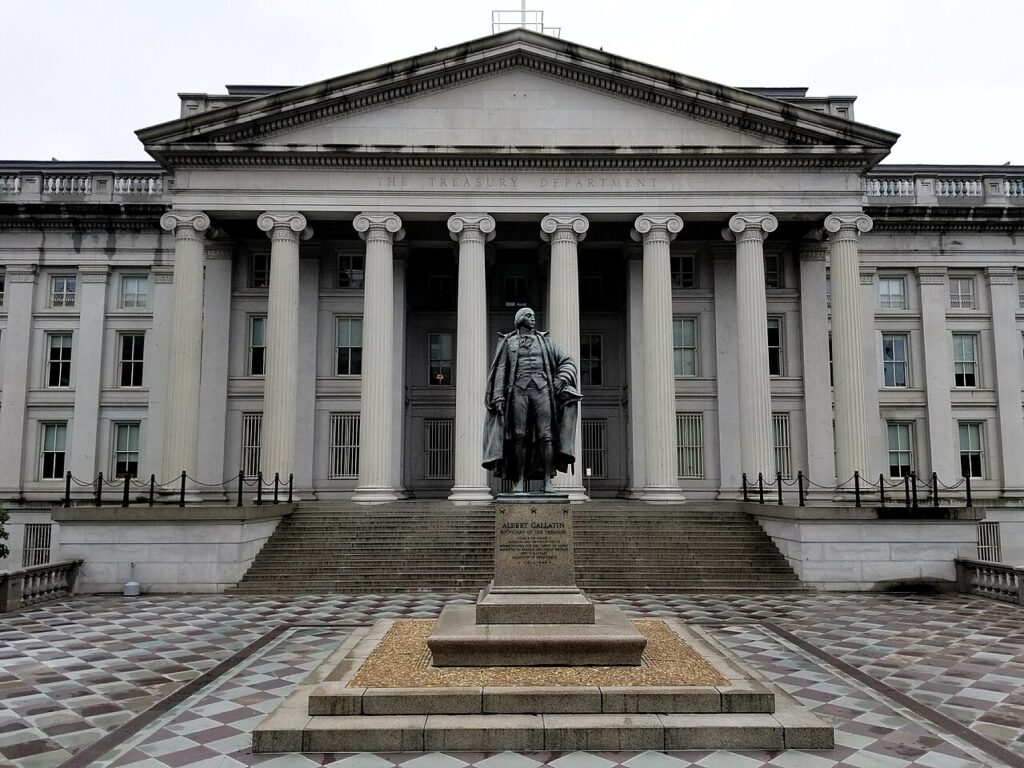
Within a single day, two of the most sensitive corners of the US government admitted that someone had got inside. On Tuesday, November 24, the Treasury Department’s Financial Crimes Enforcement Network, the bureau that receives millions of confidential reports from banks every year, said intruders had reached part of its systems. Hours earlier, The New York Times had reported that the CIA and the Office of the Director of National Intelligence had found a breach of their own. Add an acknowledged hack of an FBI crime database and a security incident at the Agriculture Department, and the Treasury hack has become the latest chapter in a bruising month for federal cybersecurity.
Quick answer: On November 24, 2026, FinCEN (part of the US Treasury) said it is investigating a cybersecurity incident that gave someone “unauthorized access to a limited subset of its systems.” Some systems were taken offline, and certain filers now have until December 30 to submit reports. FinCEN has not said what data, if any, was taken or who was responsible. The same day, the CIA and ODNI breach of an unclassified open-source intelligence system was reported; officials say classified systems were not affected. No public evidence links the incidents.
What happened in the Treasury hack
FinCEN’s notice was short. According to The Verge, which first reported the alert, the bureau said it was investigating an incident “that resulted in unauthorized access to a limited subset of its systems” and had taken some systems offline as a precaution. It said its BSA E-Filing website, where banks and other firms submit reports, was still working, although some services might not be immediately available.
The same day, FinCEN issued an order, FIN-2026-R002, giving some filers extra time. The order speaks of “a service disruption that is hindering filers’ ability to adhere to reporting obligations” and does not mention a cyberattack. It reaches back to November 18, almost a week before the disclosure. JBizNews reported that by Friday, November 20, FinCEN had already posted an alert about a disruption to its Secure Direct Transfer Mode (SDTM), the server-to-server channel large banks use to send reports in bulk. FinCEN has not said whether that outage and the unauthorized access are the same event.
What FinCEN has not said is just as important: which systems were reached, whether any data left them, when the intrusion began, how the attackers got in, and who they were.
Who gets more time to file
| Who | What the order covers | New deadline |
|---|---|---|
| Financial institutions using SDTM to file Bank Secrecy Act reports as of November 18 | Reports due November 18 to December 29 | December 30, 2026 |
| Companies that must file a beneficial ownership report | Reports due in the same window | December 30, 2026 |
| Individuals who must update a FinCEN ID | Updates due in the same window | December 30, 2026 |
| Everyone else | Not covered; the website still accepts reports | No change |
The relief is narrow. The order says institutions must still meet every other anti-money-laundering duty, including monitoring for suspicious transactions, and FinCEN says it may change or extend the date. Its Financial Institutions Hotline (1-866-556-3974), used to flag urgent suspicious activity to law enforcement, is not affected.
Why FinCEN matters so much
FinCEN is not a household name, but it sits on some of the most sensitive financial data in the country. Under the Bank Secrecy Act, banks, casinos, money transmitters and other businesses must report large cash transactions and anything that looks like money laundering, fraud or terrorist financing. A suspicious activity report is essentially a bank’s private explanation of why it distrusts a customer or a transfer.
FinCEN’s own annual review shows the scale for the 2025 financial year:
- About 4.8 million suspicious activity reports
- About 21.5 million currency transaction reports
- About 1.8 million foreign bank account reports
- Roughly 335,000 banks and other firms filing
That is why a Treasury hack draws so much attention even when the agency says only a “limited subset” of systems was touched. Nothing FinCEN has said so far suggests any of these reports were accessed, but the agency has not ruled it out either.
The CIA and ODNI breach
A few hours before FinCEN’s notice, The New York Times reported that the CIA and the ODNI had discovered a breach of an unclassified system. Nextgov/FCW, citing a person familiar with the matter, said the system is used to analyze public and commercially available information, the kind of open-source intelligence (OSINT) analysts gather from news reports, social media and commercial data. A second person said the disruption had been resolved and did not affect classified systems. The CIA declined to comment, and it is not known who carried out the intrusion or whether anything was taken.
“Unclassified” does not mean harmless. Ben Bernstein, a manager at security firm Huntress, told Nextgov/FCW: “If you can see what analysts are searching for and what topics they’re tracking, you get a solid look at U.S. intelligence priorities and blind spots without ever touching a classified file.”
The Washington Post has reported that the CIA and ODNI intrusion happened weeks earlier, and The Verge said it is unclear whether it is related to the FinCEN incident.
The FBI, USDA and NSA: a month of incidents
The Treasury hack did not come out of nowhere. Here is what has been reported at federal agencies this month. Not all of these are confirmed hacks, and officials have not linked them.
| Agency | What has been reported | Status |
|---|---|---|
| FinCEN (Treasury) | Unauthorized access to a limited subset of systems; some offline; filing deadlines moved | Under investigation; no attacker named |
| CIA and ODNI | Breach of an unclassified open-source intelligence system | Officials say resolved; classified systems not affected |
| FBI | Hack of the National Crime Information Center (NCIC) database used by police nationwide | Acknowledged by President Trump and officials; scope unclear |
| Department of Agriculture | Multiple applications taken offline after a security incident, disrupting tools used for payments to farmers | Reported by Nextgov/FCW and Government Executive |
| NSA | Three-day disruption to a classified communications network | Back to normal; DNI Jay Clayton blamed software patching |
CNN, citing unnamed sources, reported that the FBI and CIA break-ins appear to be unrelated. Speaking on the Sunday talk shows on November 22, before FinCEN’s disclosure, Clayton said the month’s outages were not coordinated or state-sponsored. Treasury Secretary Scott Bessent told CBS that banks are “by far the most resilient companies in the U.S. economy.”
The FBI has had a particularly rough autumn. In September, the hacking group ShinyHunters claimed it had breached the bureau’s FBIJobs.gov portal, and Politico later reported that the FBI classed it as a “major” incident and that the Justice Department warned the stolen background-check data could include DOJ employees. If you work with sensitive systems, our explainer on the NSA’s warning about malware hijacking military CAC cards is a useful reminder of how attackers target government users.
Treasury’s third disclosed intrusion in two years
This is not the first time Treasury has had to explain a breach:
- December 2024: Treasury told Congress an attacker had stolen a key from remote-support vendor BeyondTrust, reached employee workstations and read unclassified documents. It blamed a China state-sponsored actor and called it a major incident.
- 2025: The Office of the Comptroller of the Currency, another Treasury bureau, disclosed that attackers had accessed staff emails containing sensitive information about regulated banks. Bloomberg’s sources put the total at about 150,000 emails.
- November 2026: FinCEN’s incident, with no attacker, entry route or data named so far.
After the 2024 breach, senators Tim Scott and French Hill wrote that Treasury “maintains some of the most highly sensitive information on U.S. persons throughout government, including tax information, business beneficial ownership, and suspicious activity reports.”
Why the Treasury hack is trending
Three things pushed this story up US search charts. First, the timing: two disclosures in one day, from a spy agency and a financial watchdog, made it feel like a coordinated campaign even though officials have not said so. Second, the stakes: FinCEN data could expose investigations, informants and private banking details if it ever leaked. Third, the context: this comes after weeks of high-profile outages, from the FBI to the nationwide FAA ground stop, which have left many Americans asking how well federal systems are protected.
What it means for you
For most people, there is nothing to do today. FinCEN does not hold everyday bank account logins, and there is no evidence that personal financial data has been leaked. Still, big breach headlines are often followed by scam emails and texts pretending to be from the government or your bank. Be wary of any message claiming to be from “Treasury” or “FinCEN” that asks you to verify details or click a link; government agencies do not contact you that way.
For compliance teams at banks and money service businesses, the practical changes are the December 30 deadline for covered filings and the need to keep monitoring and reporting through the website or hotline while SDTM is disrupted.
This article is general information, not legal or compliance advice. Check FinCEN’s official notices or your compliance adviser for obligations that apply to your institution.
What happens next
Watch for answers to a few open questions: which FinCEN systems were reached and whether suspicious activity reports or beneficial ownership data sat in them; whether Treasury formally classes this as a “major incident” and notifies Congress, as it did in 2024; whether FinCEN extends the December 30 date; and whether investigators tie any of the month’s incidents together. A new Congress is sworn in on January 3, and federal cybersecurity is likely to be on the agenda for oversight hearings.
Frequently asked questions
Was the US Treasury hacked?
Yes, a part of it. On November 24, 2026, FinCEN, a Treasury bureau, said it was investigating an incident that resulted in unauthorized access to a limited subset of its systems. It has not said whether data was stolen.
What is FinCEN?
The Financial Crimes Enforcement Network is the Treasury bureau that collects and analyzes financial intelligence, including suspicious activity reports filed by banks, to fight money laundering, fraud and terrorist financing.
Was the CIA hacked too?
The CIA and ODNI found a breach of an unclassified system used for open-source intelligence analysis, according to The New York Times and Nextgov/FCW. Officials say classified systems were not affected and the disruption has been resolved.
Are the FinCEN, CIA and FBI hacks connected?
There is no public evidence that they are. CNN reported that the FBI and CIA incidents appear to be unrelated, and FinCEN has not linked its incident to any other.
Do I need to do anything after the Treasury hack?
Ordinary consumers do not need to take action, but should watch for phishing messages that use the news as bait. Banks and other filers covered by FinCEN’s order have until December 30, 2026, to submit affected reports.
Sources: FinCEN (Order FIN-2026-R002 and FY2025 Year in Review), The Verge, The New York Times, Nextgov/FCW, The Washington Post, CNN, CBS News, Politico, JBizNews, Bloomberg, Sulat.