
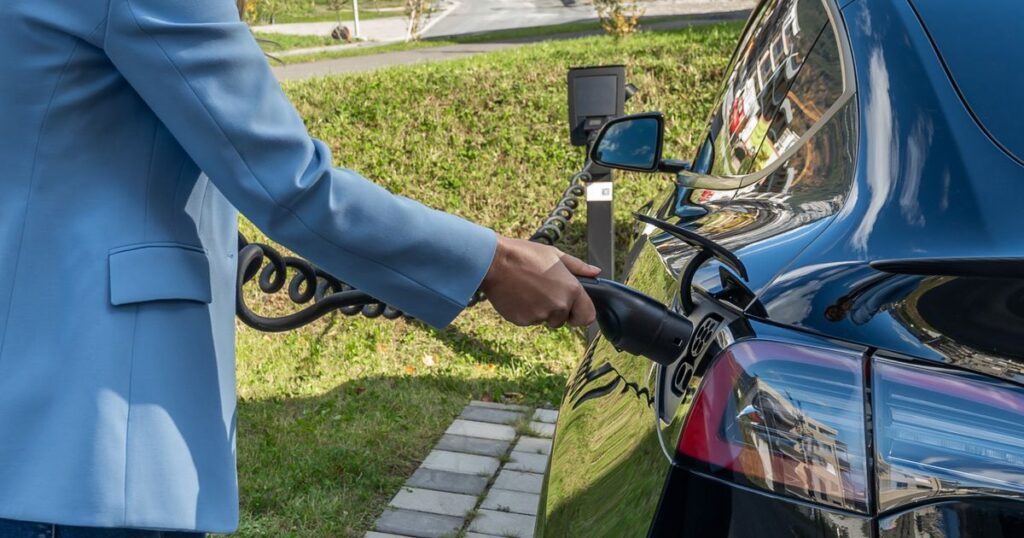
If you drive an electric car, you’ve probably noticed your range shrinking as the temperature falls. EV range in winter can drop sharply, and it’s one of the biggest worries for people thinking of switching. The good news: it’s predictable, mostly temporary, and you can do a lot to reduce it.
Quick answer: Electric cars lose range in winter because cold slows the battery’s chemistry and because heating the cabin uses battery power. In AAA’s tests, using the heater at 20°F (−7°C) cut range by an average of 41%. Newer EVs with heat pumps usually lose less. Pre-heating while plugged in, using seat heaters and keeping the car in a garage all help.
Why electric cars lose range in the cold
1. The battery works less efficiently
EVs use large lithium-ion batteries. In the cold, the liquid inside them thickens and the chemical reactions slow down, so the battery can’t release energy as easily. It’s the same reason your phone battery dies faster in the cold, just on a much bigger scale.
2. Heating takes energy
A petrol car heats its cabin using waste heat from the engine. An electric motor makes very little waste heat, so the car has to use battery power to warm the cabin and often the battery itself. On short trips, heating can use a big share of the energy.
3. Regenerative braking is limited
EVs recover energy when slowing down. When the battery is cold, the car may limit how much it can recharge this way, so you lose some of that bonus range.
4. Winter roads and tyres
Snow, slush, cold air density and winter tyres all add resistance, which uses more energy, just as in a petrol car.
How much range do EVs lose in winter?
| Condition (AAA test) | Average range change |
|---|---|
| 20°F (−7°C) with heater on | About −41% |
| 95°F (35°C) with AC on | About −17% |
| 75°F (24°C), mild baseline | Normal range |
In AAA’s test, a trip that would cover 100 miles in mild weather covered only about 59 miles at 20°F with the heater running, and heating added nearly $25 per 1,000 miles in charging costs. That study, from 2019, tested five EVs. Many newer models with heat pumps and better battery heating lose noticeably less, but every EV loses some range in serious cold.
Does winter damage an EV battery?
No, normal winter driving doesn’t cause lasting harm. The lost range returns when the battery warms up. The one thing to avoid is fast-charging a very cold battery, which is why many EVs warm the battery first. Most cars handle this automatically, especially if you set the charger as your destination in the navigation system.
7 ways to get more EV range in winter
- Pre-heat while plugged in. Warm the cabin and battery from the charger, using grid power instead of your battery. Most EV apps can schedule this.
- Use seat and steering-wheel heaters. Heating your body directly uses far less energy than heating all the air in the car.
- Park in a garage when you can, so the battery starts warmer.
- Use the car’s eco or winter mode, which limits power-hungry features.
- Precondition before fast-charging by navigating to the charger, so the battery is warm enough to charge quickly.
- Check tyre pressure. It drops in cold weather and increases rolling resistance.
- Slow down a little. Highway speed has a big effect on range in any season.
Buying an EV for a cold climate?
- Look for a heat pump. It can heat the cabin much more efficiently than a simple resistive heater.
- Check real-world winter tests, not just the official range.
- Plan for home charging, which makes pre-heating easy every morning.
- Buy more range than you think you need if you regularly drive long distances in winter.
Frequently asked questions
How much range does an EV lose in winter?
It varies by car and temperature. AAA measured an average 41% drop at 20°F with the heater on, while many newer EVs with heat pumps lose less.
Why do electric cars lose range in the cold?
Cold slows the battery’s chemistry, and heating the cabin and battery uses stored energy.
Is the lost range permanent?
No. Range returns as temperatures rise and the battery warms.
Do heat pumps help EV range in winter?
Yes. Heat pumps heat the cabin much more efficiently than traditional electric heaters, which reduces range loss.
Sources: AAA (2019 cold- and hot-weather EV study), U.S. Department of Energy (fueleconomy.gov), Battery University, EV manufacturer guidance.